

Cast Iron Ball Valve
Description
Technical Parameters
The primary purpose of a ball valve is to control the flow of medium in a pipeline by cutting off, distributing, or changing its direction. One specific type of ball valve is the floating ball valve, in which the closing system is suspended. This design allows for simplicity in both its structure and operation, making it ideal for situations where quick opening or closing of flow, easy direction changes, or simple installation are crucial factors. The versatility of ball valves makes them widely applicable across various industries such as petroleum refining, chemical, paper making, pharmacy, food, electric power, steel, and many others.
Standard compliance
We have designed and manufactured valves that conform to industry standards such as ANSI B16.10, DIN3357, and BS5159. Our products are made with quality materials and adhere to strict guidelines to ensure durability and reliability. Rest assured that you can rely on our valves for your specific application needs.
Let's discuss the dimensions for face to face contact. There are several standards that apply to these dimensions, including ANSI B16.10, JIS B2002, DIN3202 F4/F5, and BS4460. It's important to ensure that any dimensions are compliant with these standards to ensure proper fit and function. By adhering to these standards, we can ensure that our face to face dimensions are accurate and reliable.
The flanged end of a system conforms to various industry standards including ANSI B16.5, JIS B2212, DIN2501, DIN2533, and BS4504. These standards ensure that the flanged end will properly connect to other components in the system according to the predetermined specifications. It's important to use the correct standard when designing and installing flanged ends in order to ensure safe and efficient operation of the system. By following these industry standards, engineers and manufacturers can ensure that their systems meet the necessary requirements for reliable and consistent operation.
4.Test and inspection: API598, ISO5208, JIS B2003
Specifications
·Size: 1/2” to 10” (DN15 to DN250)
·Pressure Rating: 125LB,150LB, PN10,PN16, JIS10K
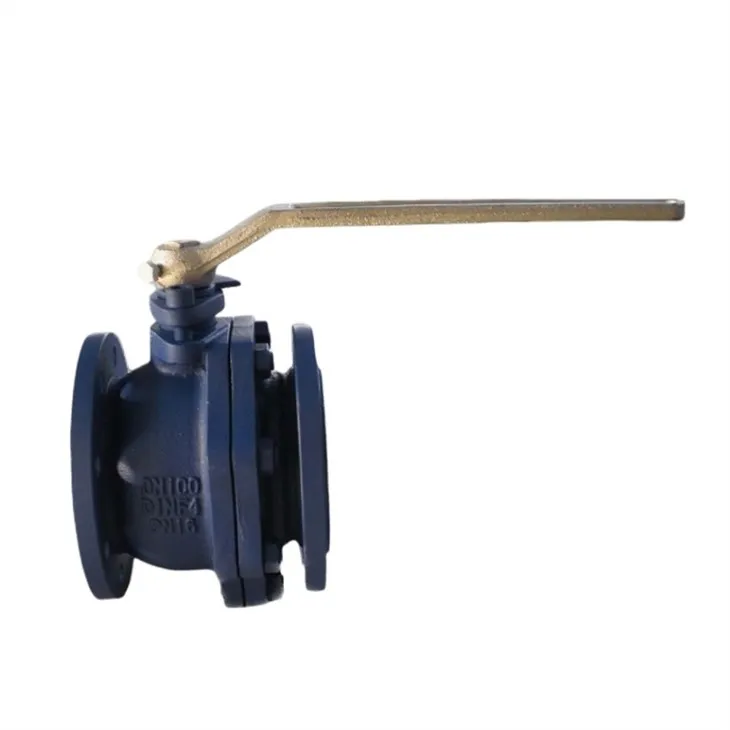
This cast iron ball valve features a full bore design and a PTFE seat, ensuring optimal performance and reliability. It also has a side entry for added convenience and can be ordered with or without an ISO5211 PAD. Additionally, its 2PC floating ball design provides excellent control and functionality for a wide range of applications. Get the most out of your industrial equipment with this high-quality ball valve.
The body of the product is made of cast iron and ductile iron, while the ball is constructed from SS304. We have carefully selected these materials to ensure durability and reliability. Additionally, the use of cast iron and ductile iron provides strength, while the SS304 ball offers resistance against corrosion. Overall, this combination of materials guarantees a high-quality and long-lasting product.
Possible alternative:
In order to operate a machinery or system, one can choose from various types of actuators, such as levers, gears, pneumatic devices or electric motors. Each of these options offers specific advantages and disadvantages depending on the application and requirements. A lever, for instance, allows for a simple and direct manual control of the force applied, but may not be efficient for large-scale movements or high precision. A gear, on the other hand, can transmit power and motion over longer distances and with greater speed ratios, but may require careful maintenance and lubrication. A pneumatic actuator employs compressed air to create mechanical motion, which can be powerful and fast, but also noisy and prone to leaks. Finally, an electric actuator can provide precise and highly controllable movement, as well as feedback and automation capabilities, but may involve complex wiring and programming. The choice of the appropriate actuator depends on factors such as the required force, speed, accuracy, reliability, safety, and cost, as well as the environment and the operator's skills and preferences.
How does a floating ball valve work
The valve is made up of a hollow ball with a central hole that enables fluid to pass through. Two valve seats hold the ball in position, one on each side of the ball. The ball is pressed tightly against the downstream seat to seal the valve and prevent fluid from flowing when it is closed. When the valve is open, the ball is free to move away from the downstream seat, enabling fluid to flow through the valve. Because the ball floats on the fluid, it helps to maintain a secure seal and minimize friction.
The advantages of floating ball valves
This product boasts a lightweight design with a compact size, making it simple in structure and easy to carry.
With its tight and dependable construction, the floating ball mechanism guarantees exceptional sealing functionality, effectively preventing any chances of leakage and minimizing the risk of potential contamination.
The valve's low torque is attributed to its unique floating ball design, which effectively minimizes the force needed to operate the valve. Consequently, opening and closing the valve becomes effortless due to the reduced torque requirement.
ANSI 125LB/150LB cast iron flanged ball valve

JIS 10K cast iron flanged ball valve

DIN PN10/PN16 cast iron flanged ball valve

Our cast iron flanged ball valve is suitable for use in DIN PN10/PN16 piping systems and is equipped with an ISO5211 PAD for easy mounting of actuator devices. The valve is manufactured using high-quality materials to ensure durability and optimal performance. We pride ourselves on delivering products that are highly similar to the original, designed to meet the specific needs of our clients. If you require a reliable ball valve that can handle high-pressure applications, our DIN PN10/PN16 cast iron flanged ball valve is the perfect choice.

BS cast iron flanged ball valve

Hot Tags: cast iron ball valve, China cast iron ball valve manufacturers, suppliers
Send Inquiry